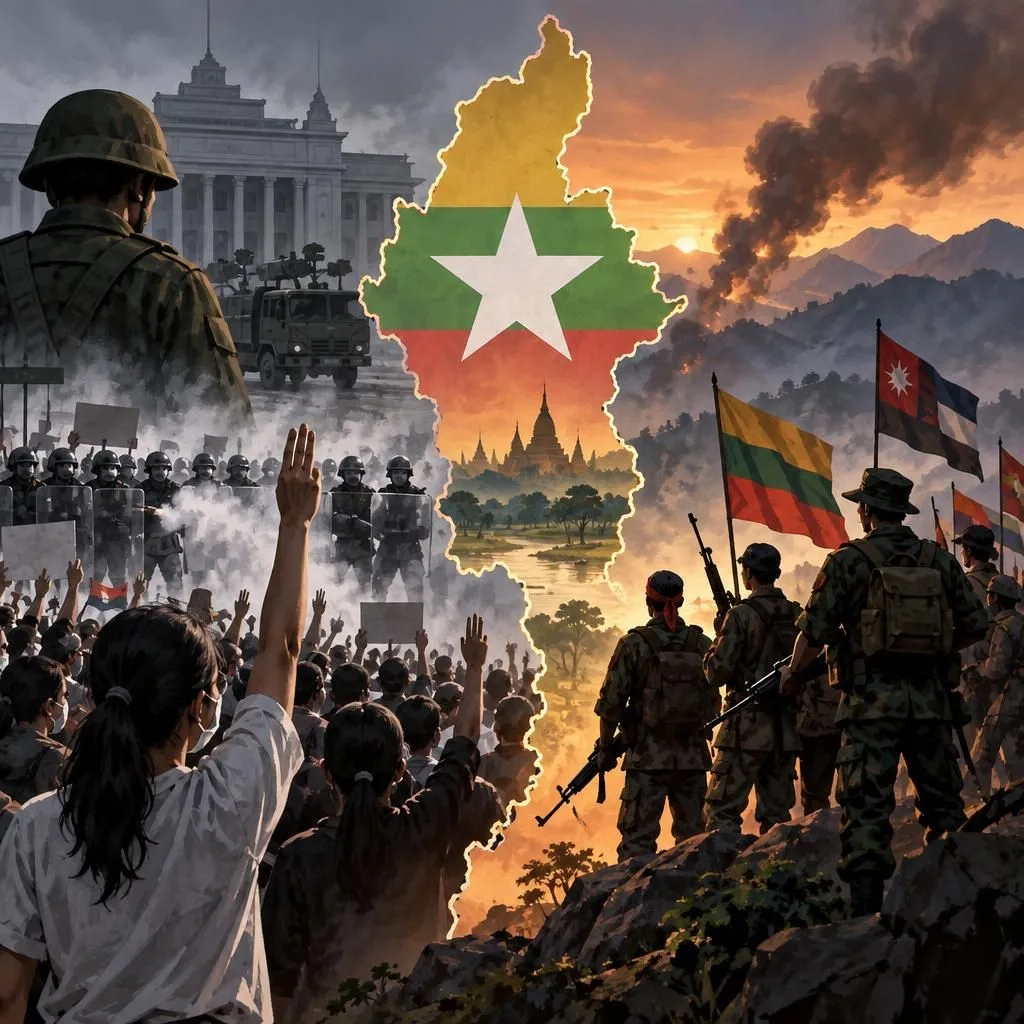
On February 1, 2021, the Myanmar military launched a surprise coup d'état, alleging fraud in the previous year's general election. Key civilian government leaders, including State Counsellor Aung San Suu Kyi, were detained, abruptly halting decades of democratic transition. Initially, the Civil Disobedience Movement (CDM)—led by healthcare workers and teachers—and peaceful candlelight vigils spread nationwide. However, as the junta responded with harsh, bloody crackdowns, the nature of the resistance rapidly shifted toward armed conflict.
1. The Transition from Peaceful Resistance to Armed Struggle
As the military suppressed protests with extreme violence, including live ammunition and nocturnal arrest raids, civil society and youth keenly recognized the need for armed resistance for survival and self-defense. In this process, urban protesters began fleeing surveillance to border regions and jungles.
Establishment of the National Unity Government (NUG): Legitimately elected lawmakers from the democratic camp joined ethnic minority representatives to officially launch an alternative shadow government.
Formation of the People's Defense Force (PDF): Armed resistance groups voluntarily joined by ordinary citizens, students, and youth were formed across the country.
2. Solidarity with Ethnic Armed Organizations (EAOs) and Expanding Battlefronts
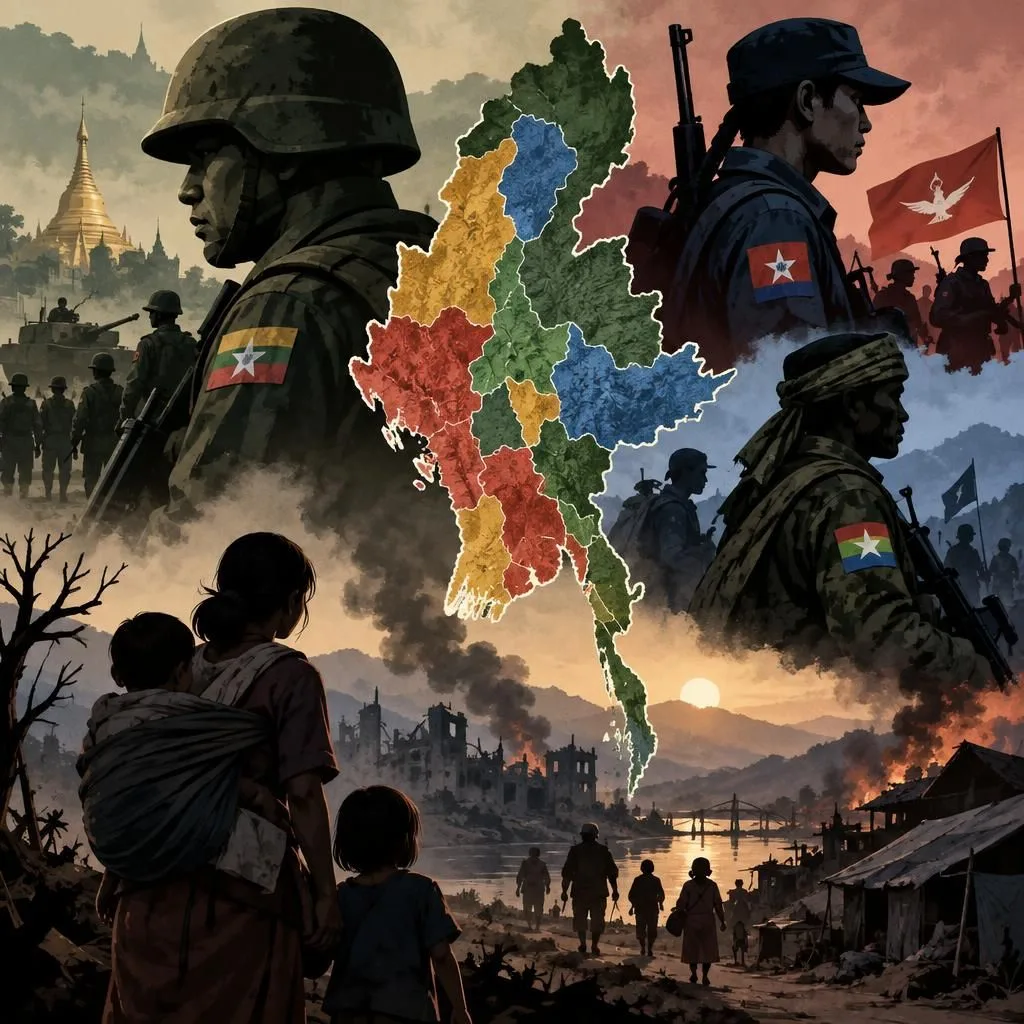
Since independence, Myanmar has a decades-long history of various ethnic armed organizations—such as the Karen, Kachin, and Shan—clashing with the central government while demanding autonomy. Following the coup, many of these groups formed a united front by opening bases and providing military training to pro-democracy youth.
Guerrilla warfare spread beyond the mountainous borderlands to the central plains—heartlands of the Bamar majority where military control had traditionally been robust—dispersing battlefronts across the entire country.
The conflict is expanding beyond a mere struggle for regime change into a structural push toward establishing a federal democracy for a multiethnic nation.
3. Deepening Humanitarian Crisis and Challenges for the International Community
Prolonged fighting and military airstrikes have displaced millions across Myanmar, causing widespread collapse of healthcare and education systems. Shortages of food and essential medicines now threaten not only refugee camps in border areas but also ordinary residential communities.
Despite ASEAN mediation efforts and international resolutions, substantial hurdles remain regarding on-the-ground access and the enforcement of effective sanctions. Alongside the trajectory of the armed conflict, sustained global attention and humanitarian relief to protect civilians are urgently needed.