The Transatlantic Coalition at an Economic Crossroads
For decades, the foundation of Western foreign policy rested on shared democratic values and synchronized economic interests between North America and Western Europe. However, structural shifts over the past decade—marked by China's aggressive manufacturing rise and Europe's mounting competitiveness challenges—have introduced profound friction into that transatlantic alignment.
As Washington intensifies its strategic competition with Beijing across high technology, industrial subsidies, and critical supply chains, it increasingly urges European allies to adopt a unified stance. Yet European policymakers face a fundamentally different economic reality: stagnant domestic growth, high energy costs, and heavy exposure to the Chinese export and consumer markets. Understanding Washington's strategic choices requires examining how European industrial strain limits the scope of transatlantic alignment.
The Roots of Europe's Industrial Strain
Europe’s economic model, particularly that of industrial engines like Germany and northern Italy, was built on predictable pillars: affordable imported energy, highly integrated supply chains, and robust export markets abroad. In recent years, each of these pillars has faced severe disruptions:
Energy Cost Disparities: The loss of cheap pipeline gas following geopolitical ruptures in Eastern Europe elevated energy prices for energy-intensive sectors like chemicals, metallurgy, and heavy machinery, putting European plants at a structural cost disadvantage compared to US and Asian competitors.
Chinese Market Transformation: China transitioned rapidly from being merely a high-volume consumer of European manufactured goods to a direct global competitor in advanced sectors, notably automotive manufacturing, industrial robotics, and renewable power hardware.
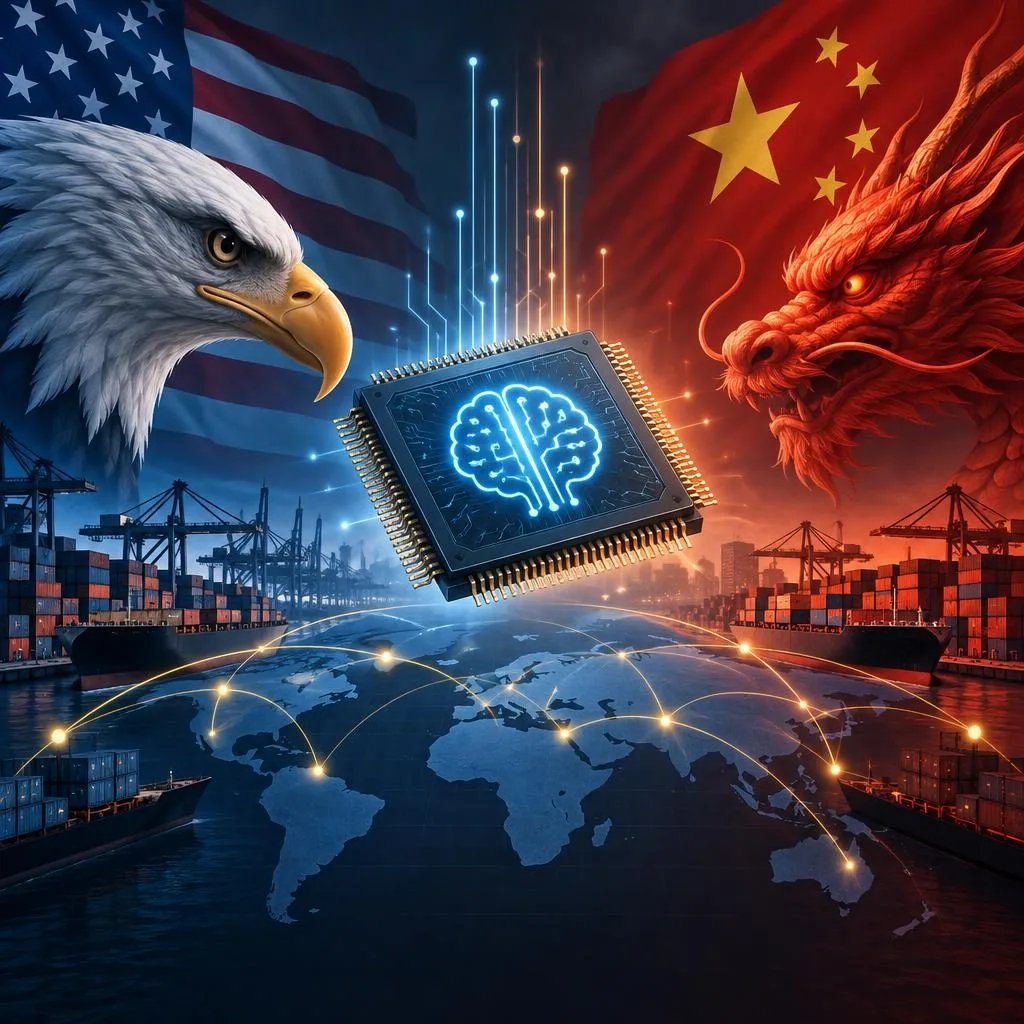
Lagging Tech Capitalization: Compared to the massive venture and capital investment ecosystems of Silicon Valley or Shenzhen, European innovation has struggled to scale foundational digital platforms and frontier artificial intelligence enterprises at comparable global scale.
This combination has stoked widespread debate within the European Union over potential "deindustrialization"—a scenario where long-standing manufacturing firms relocate production to jurisdictions with cheaper power or more generous subsidies, including the United States.
China's Strategic Leverage in Europe
Because many of Europe’s flagship enterprises depend heavily on sales inside China to sustain their research and operational margins, sudden economic decoupling carries an asymmetrical cost for European capitals. While the US economy is largely driven by domestic consumer consumption and service industries, European economies remain substantially more export-oriented as a share of GDP.
Beijing is acutely aware of this vulnerability. Chinese trade diplomacy often targets specific European member states or sectors—such as luxury consumer goods, agricultural exports, and automotive technology—signaling that punitive alignment with Washington's trade restrictions could invite targeted commercial retaliation. This creates internal division among European Union member states, where countries with high manufacturing exposure urge moderation, while others advocate for harder geopolitical lines.
Washington's Strategic Options
Facing a weakened but indispensable European partnership, Washington confronts three broad strategic pathways in managing transatlantic cooperation against Beijing's economic ascendancy:
Strict Alignment and Secondary Leverage: The United States could demand rigorous adherence to export controls, investment screenings, and technology containment, using access to the US financial system or trade measures as leverage. While this guarantees short-term containment, it risks sparking deep political backlash in European capitals, which might view such policies as an infringement on strategic autonomy.
Divergent Accommodation: Washington could accept that Europe will pursue a distinct path of "de-risking" without full decoupling, focusing US unilateral actions in the Indo-Pacific while leaving European-Chinese trade largely uncoordinated. The downside to this approach is that Chinese industrial overcapacity could increasingly flow into European markets, weakening an ally while leaving Western standards fragmented.
Cooperative Industrial Integration: Under this framework, Washington actively integrates European supply chains into US clean-energy, defense, and semiconductor incentive programs. By treating allied resilience as an extension of domestic security, the US reduces the economic penalty European firms face when shifting dependencies away from Beijing.
Structural Tensions Within the Western Alliance
Even when Washington prefers cooperative integration, practical domestic politics often complicate execution. Measures designed to restore American domestic manufacturing—such as protective subsidies and local-content requirements—have drawn sharp criticism from Brussels, where leaders worry these incentives simply pull remaining European industrial capacity across the Atlantic.
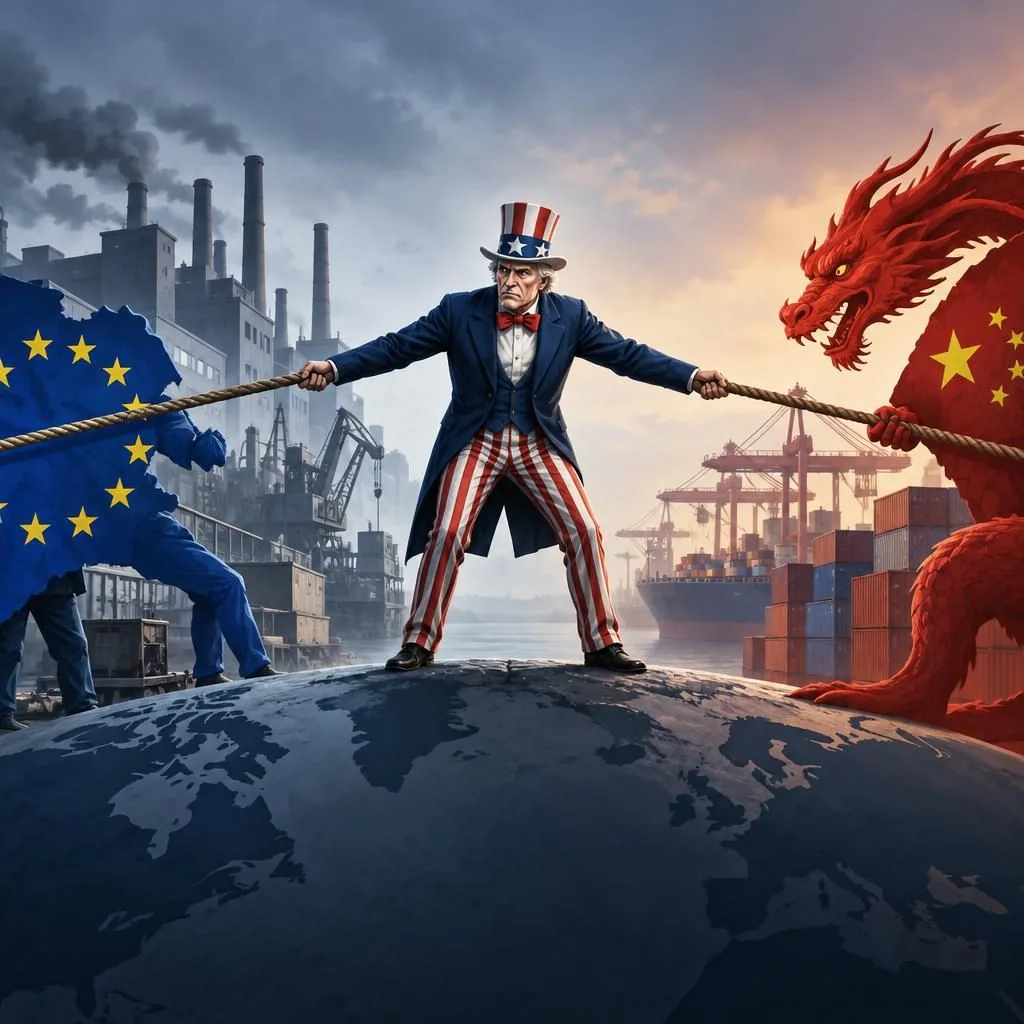
Consequently, European policymakers often find themselves caught between two industrial juggernauts: a subsidizing, lower-cost China flooding markets with cost-effective industrial goods, and an energetic United States using industrial policy and energy abundance to attract global capital.
Conclusion: Managing Interdependence in a Fragmented Era
Europe’s economic crossroads demonstrates that geopolitical alliances cannot operate independently of industrial realities. For the United States, an effective counterweight to Chinese economic ascendancy cannot be achieved by coercive pressure alone. If Washington expects Europe to curb technological outflows and push back against state-backed market distortions, it must offer viable commercial alternatives rather than zero-sum choices.
Ultimately, whether the transatlantic partnership remains resilient will depend on whether both shores can negotiate a common industrial framework—one that restores European competitiveness while maintaining collective deterrence in an increasingly multipolar global order.