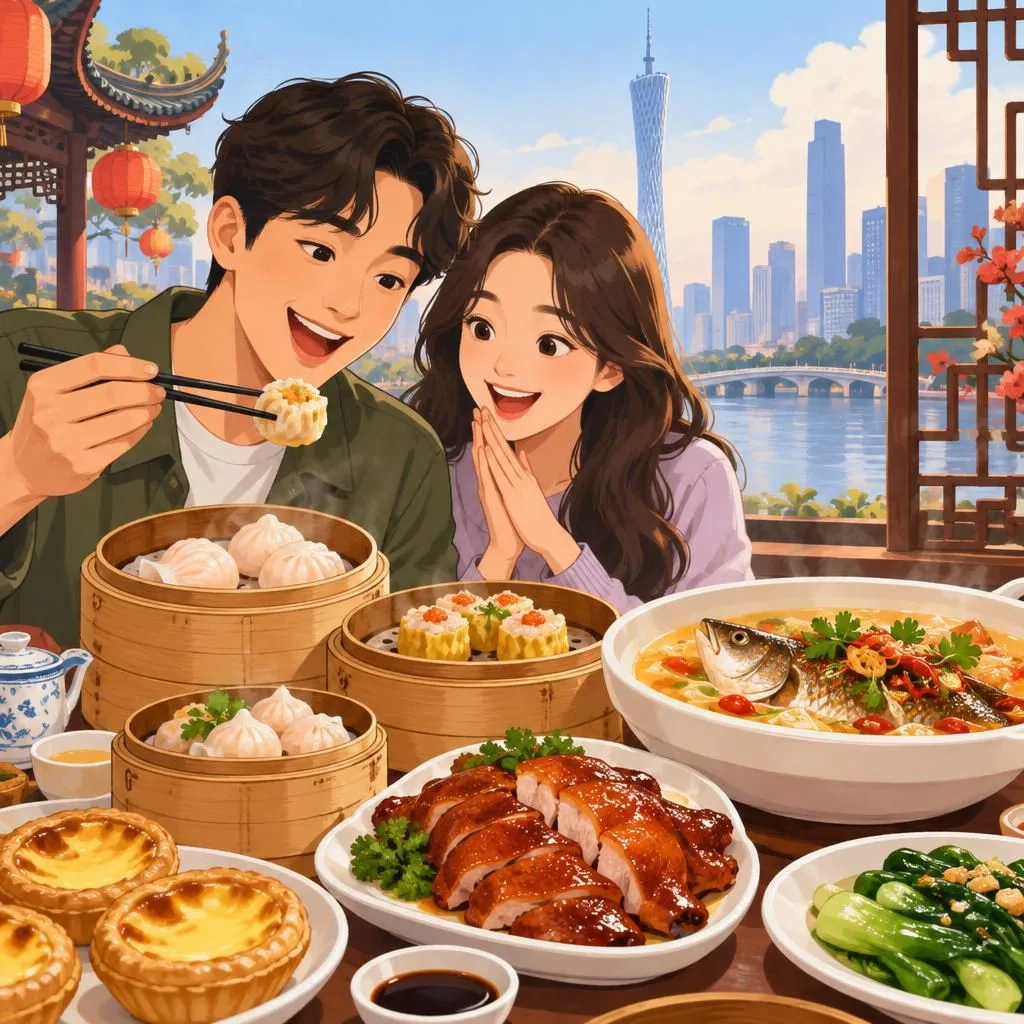
Guangzhou is celebrated worldwide as the capital of Cantonese cuisine, giving rise to the famous adage, "Eating in Guangzhou." For Korean travelers, Cantonese food can be an exceptional culinary match: it focuses on pristine freshness, comforting broths, and delicate savory balances rather than overpowering numbing spices. However, navigating Cantonese menus can present challenges, from subtle texture preferences to language barriers and long queues. This curated list highlights ten premier eateries in Guangzhou that align smoothly with Korean palates, complete with signature recommendations and practical trade-offs.
1. Dian Dou De (点都德)
Dian Dou De is one of Guangzhou's most recognizable contemporary dim sum chains, serving traditional Cantonese morning tea (yum cha) all day in a classic teahouse setting.
Must-Order Dishes: Red rice prawn rolls (Jinsha Haimi Changfen), baked egg tarts, shrimp dumplings (har gow).
Pros: Convenient QR-code ordering with pictures; extensive branches across major tourist areas; consistent quality.
Cons: Peak breakfast and lunch hours bring long wait times; dining rooms are often loud and bustling.
2. Bingsheng Taste (炳胜品味)
Starting as a humble seafood eatery, Bingsheng evolved into a Michelin-recognized Cantonese restaurant chain famous for elevating rustic Cantonese staples with refined technique.
Must-Order Dishes: Crispy barbecue pork (Mimi Chashao), black tofu with wild mushroom sauce, giant pineapple buns (Boluo Bao).
Pros: The signature char siu melts in the mouth without excessive gaminess; elegant ambiance ideal for business diners or family trips.
Cons: Noticeably higher price point than street-side eateries; advance reservations are practically mandatory on weekends.
3. Taotao Ju (陶陶居)
Operating since 1880, Taotao Ju is a historic teahouse on Shangxiajiu Pedestrian Street that offers a vivid glimpse into Lingnan architectural elegance alongside timeless dim sum.
Must-Order Dishes: Crispy skin roast pigeon (Zhonghua Shoushen Ruban), steamed chicken feet with abalone sauce, classic siu mai.
Pros: Rich historic atmosphere; traditional carts and open tea service provide an authentic cultural experience.
Cons: Flagship branch can feel overwhelmed with tourists; service pacing varies during peak shifts.
4. Guangzhou Restaurant (广州酒家)
Known by the honorific "First House of Guangzhou Flavors," this state-backed heritage restaurant embodies traditional banqueting and quintessential Yue cuisine.
Must-Order Dishes: Wenchang chicken (sliced chicken with ham and liver), salted egg yolk custard buns (Liusha Bao), suckling pig slices.
Pros: Uncompromising culinary standard for heritage recipes; comfortable dining rooms suitable for large gatherings.
Cons: Flavors lean strictly traditional, which some modern diners may find less punchy than Sichuan or Korean fare.
5. Tai Er Chinese Sauerkraut Fish (太二酸菜鱼)
While native to Sichuan cuisine, Tai Er was founded in Guangzhou and became an unprecedented phenomenon throughout the city. Its refreshing sour and spicy profile resonates immediately with Korean visitors fond of kimchi stew.
Must-Order Dishes: Classic pickled cabbage snakehead fish (Suan Cai Yu), brown sugar glutinous rice cakes (Ciba).
Pros: The zesty, fermented pickled cabbage cuts through rich meats and feels intimately familiar to Korean taste buds.
Cons: Firm policies limit party sizes (no tables over four people at many branches) and no spice adjustments are allowed.
6. Tiger Prawn Vietnamese Restaurant (大头虾越式风味餐厅)
Situated near Beijing Road Pedestrian Street, Tiger Prawn is an institution that draws immense queues daily for its southern Asian seafood specialties adapted to Chinese metropolitan tastes.
Must-Order Dishes: Vietnamese curry river prawns with garlic toast, lemongrass pork chops, morning glory stir-fried with shrimp paste.
Pros: Rich, aromatic curries and crispy toast offer zero flavor resistance for international visitors; generous portion sizes.
Cons: Wait times can easily exceed 60 to 90 minutes during dinner; table spacing is relatively tight.
7. Xiang Qun Restaurant (向群饭店)
Xiang Qun is a benchmark for "Dai Pai Dong" home-style Cantonese dining, famous for delivering the elusive wok hei (breath of the wok) in an unpretentious neighborhood environment.
Must-Order Dishes: Scallion oil poached chicken (Congyou Ji), pan-fried lotus root cakes, stir-fried beef with bitter melon.
Pros: The fragrant ginger and green scallion sauce on the chicken mirrors the savory satisfaction of Korean spring onion condiments.
Cons: Basic interior decor; English menus are limited, making photo translation apps essential.
8. Yin Ji Changfen (银记肠粉店)
Yin Ji has been steaming delicate cloth-pulled rice rolls (changfen) since 1958. It is widely considered an indispensable morning stop for visitors seeking authentic local breakfast.
Must-Order Dishes: Beef and shrimp mixed rice noodle rolls (Yuanwei Niurou Xiaren Chang), minced pork and century egg congee (Pidan Shourou Zhou).
Pros: Quick turnover, warm and gentle on the stomach, and exceptionally budget-friendly.
Cons: Texture is soft and slippery, which can take adjustment for diners expecting chewy rice cakes; seating is compact.
9. Chen Tian Ji (陈添记)
Tucked away in the alleys of historic Xiguan on Baohua Road, this legendary food stall has thrived for decades by perfecting only three traditional items.
Must-Order Dishes: Seasoned crispy fish skin (Zuban Yupi), handmade flat rice sheets, boat congee (Tingzai Zhou).
Pros: The fish skin is tossed with sesame oil, cilantro, chili, and roasted peanuts—creating a crunchy cold appetizer that pairs seamlessly with beer, reminiscent of Korean seasoned bar snacks.
Cons: Open-air alley seating with no air conditioning; menu options are limited strictly to three items.
10. Nanxin Milk Dessert Expert (南信牛奶甜品专家)
A sweet conclusion to any Guangzhou food trail, Nanxin has specialized in traditional water buffalo milk desserts since the 1930s on Shangxiajiu Road.
Must-Order Dishes: Double skin milk curd (Shuangpi Nai, served warm or cold), spicy ginger milk curd (Jiangzhuang Nai), mango pomelo sago.
Pros: Silky texture with a deep dairy flavor; the sharp kick of fresh ginger juice cuts through milk sweetness effectively.
Cons: Water buffalo milk is richer than standard cow milk, which can feel heavy for some after a large dinner; payment counters can be chaotic during rush hours.
Practical Tips for Korean Diners in Guangzhou
To ensure a smooth culinary trip, keep these practical dining guidelines in mind:
Tableware Rinsing Ritual (Yao Wan): Cantonese restaurants provide a basin and hot tea at the beginning of the meal. Locals rinse their bowls, spoons, and chopsticks before eating.
Coriander (Xiangcai) Caution: While Cantonese food uses less cilantro than northern cuisines, it still appears frequently in congee and cold dishes. Request "bu yao xiangcai" if you prefer your dishes without it.
Digital Payments: Ensure your Alipay or WeChat Pay account is linked to an international credit card before traveling, as almost all ordering and payments are now conducted via QR code.