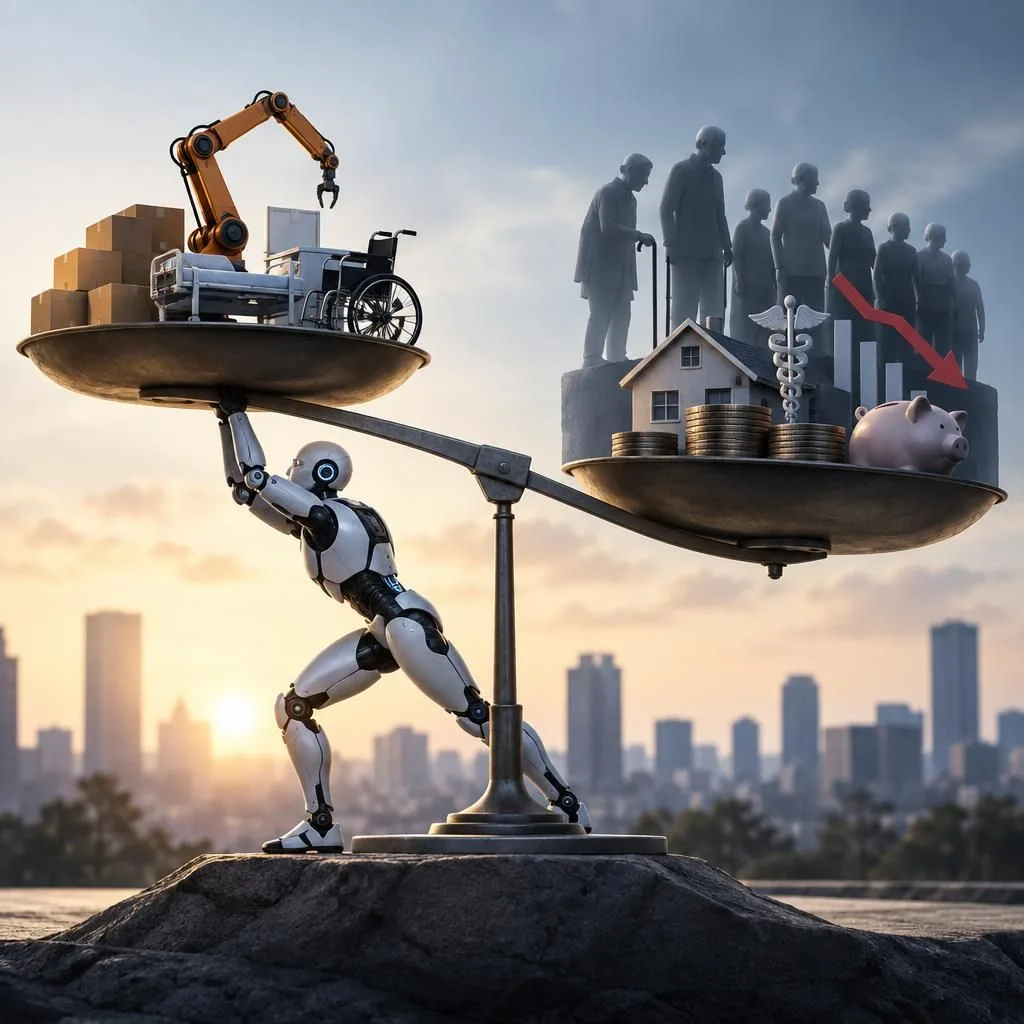
Across major economies from East Asia to Western Europe, demographic shifts are reshaping the foundation of modern industry. Record-low fertility rates combined with aging populations are shrinking the working-age labor force faster than historical immigration or pension adjustments can manage. In response, technologists and policymakers increasingly look toward physical AI—artificial intelligence embedded into machines, humanoid robots, and autonomous systems capable of acting in the physical world—as a potential panacea. But can smart machines genuinely erase the side effects of population decline?
The short answer is nuanced: physical AI will likely mitigate severe production bottlenecks and sustain critical infrastructure, but it cannot single-handedly eliminate the systemic economic and social repercussions of a shrinking population.
Where Physical AI Can Fill the Labor Void
Traditional automation excelled at fixed, repetitive industrial operations within tightly controlled environments, such as car assembly lines. Physical AI represents a generational leap because it combines multimodal perception, foundation models, and dexterous robotics to handle unstructured, unpredictable tasks. This adaptability makes it uniquely suited for industries currently facing acute labor deficits:
Logistics and warehousing: Mobile manipulators and sorting robots can navigate dynamic aisles, restock inventory, and pack items without requiring full human staffing.
Agriculture and food harvesting: Autonomous tractors, pruning robots, and precision pickers reduce dependency on seasonal farm workers who are increasingly difficult to recruit.
Elderly and healthcare support: Robotic assistants can perform heavy lifting, linen transfer, medication delivery, and basic mobility assistance, freeing human nurses and caregivers to focus on relational and complex medical tasks.
Municipal and utility maintenance: Autonomous systems can inspect underground pipes, clear roads, and monitor electrical grids that aging human crews struggle to maintain.
The Supply Problem vs. The Demand Problem
While physical AI can defend the supply side of the economy by keeping factories running and supply chains moving, population decline creates an equally daunting demand-side crisis. Robots can produce goods, but they do not buy groceries, purchase homes, pay tuition, or travel for leisure.
A shrinking population naturally leads to a contraction in aggregate consumer demand. Without domestic consumers, businesses in service, retail, and real estate face diminishing markets. Even if physical AI boosts output efficiency to unprecedented levels, industries must find buyers for their goods—a reality that may spark intense export competition or deflationary pressures when domestic consumption drops.
The Fiscal Equation: Who Funds Public Services?
One of the most pressing side effects of demographic decline is the collapse of the welfare dependency ratio. In pay-as-you-go pension and universal healthcare systems, a large pool of active workers funds benefits for a smaller retired cohort. When birth rates decline, that ratio inverts.
A robot does not pay income tax or national health insurance premiums under current tax codes. Replacing human workers with automated machinery without overhauling fiscal structures risks leaving social safety nets underfunded.
For physical AI to preserve standard-of-living safety nets, governments would likely need to restructure public finance. Ideas such as automation taxes, expanded corporate profit taxes, or sovereign wealth funds driven by AI productivity gains are frequently proposed, but implementing them without dampening technological innovation remains a difficult political challenge.
Technological and Capital Hurdles
It is also essential to distinguish long-term potential from current technological reality. Deploying physical AI on an economy-wide scale faces major practical constraints:
High upfront capital costs: Developing, procuring, and integrating advanced robotic hardware is expensive, often pricing out small- and medium-sized enterprises that employ the vast majority of workers.
Hardware durability and edge cases: Physical systems wear down, require power management, and frequently stumble over subtle environmental variations that any human easily navigates.
Human touch and empathy: Caregiving, teaching, and psychological support demand genuine empathy, emotional resonance, and ethical judgment that mechanical actuators cannot replace.
Conclusion: A Crucial Cushion, Not an Easy Fix
Physical AI will be an indispensable lifeline for demographically declining societies. It can keep essential services operational, prevent manufacturing collapse, and relieve human workers from debilitating physical toil. However, technology cannot reproduce the broader societal benefits of young, vibrant generations—from consumer dynamism and creative renewal to family cohesion and community vitality.
To truly navigate the era of shrinking populations, societies will need to pair physical AI deployment with comprehensive reforms in social welfare, fiscal policy, urban planning, and family support systems.